
01
Evaporation or leak?
Every pool loses water to the weather, and on a hot, windy Melbourne day that can be a lot. A bucket test compares the pool with water beside it, so we know whether there's a leak at all before testing lines.
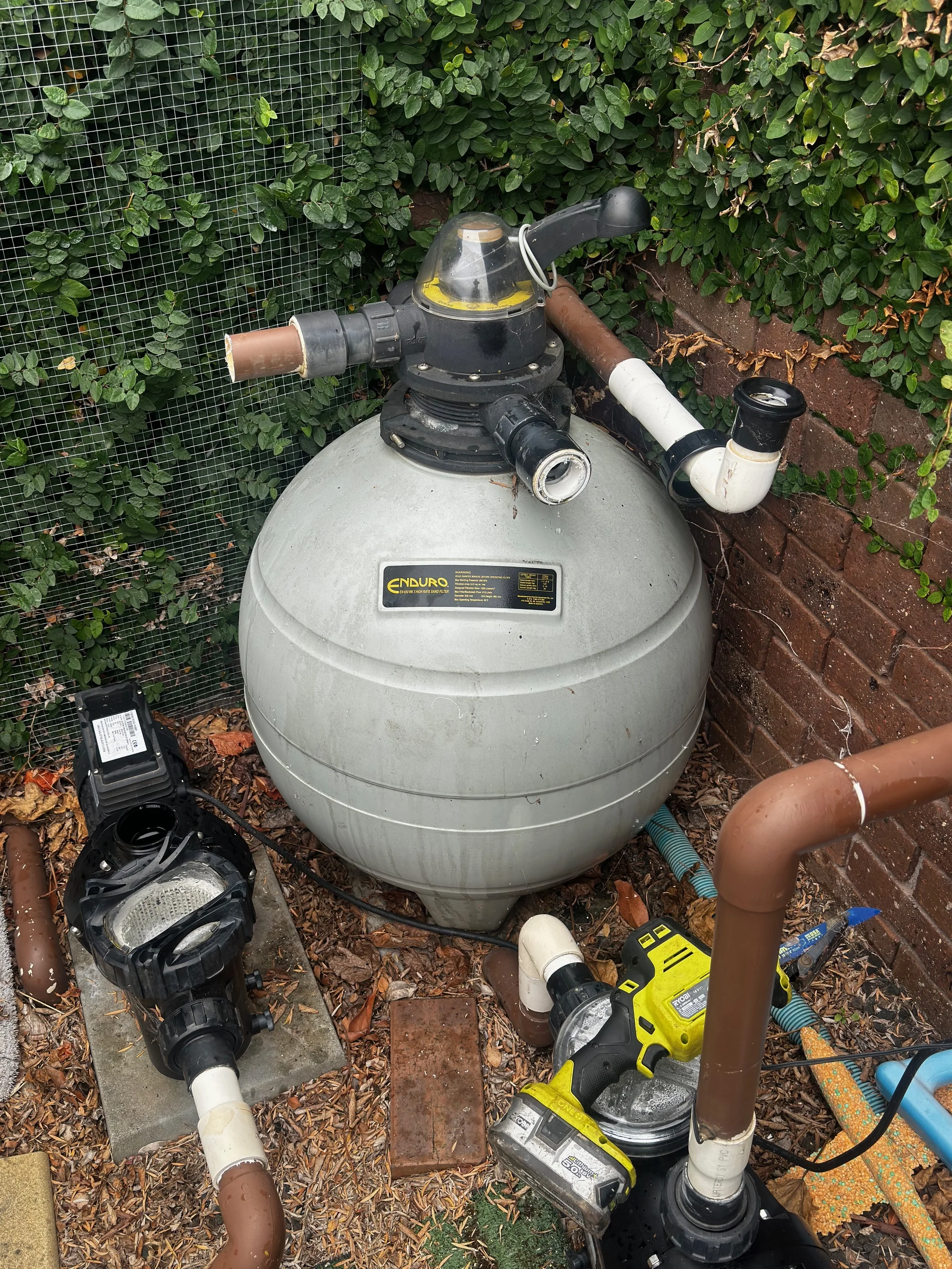
Find it before you dig
A pool losing water, a pump that keeps losing prime or a damp patch near the pad all point at the plumbing, but none of them tells you which line. We isolate each circuit and test it on its own, so digging starts in the right place, or doesn't need to start at all.
Line by line
Skimmer, main drain, returns and features tested separately.
Pressure and vacuum
Return lines held under pressure. Suction lines checked for air ingress.
Evidence first
Results recorded before anyone lifts a paver.
Each line isolated and tested on its own, so any digging starts in the right place.
01
Every pool loses water to the weather, and on a hot, windy Melbourne day that can be a lot. A bucket test compares the pool with water beside it, so we know whether there's a leak at all before testing lines.
02
Return lines leak water out under pressure. Suction lines often draw air in instead, showing up as bubbles in the pump basket or a pump that loses prime, sometimes without any visible water loss.
03
Each line is plugged and tested on its own: returns held under pressure with a gauge, suction lines checked for air ingress. A line that won't hold is a line with a fault.
04
Once the faulty line is known, we trace its route and narrow the position down before any paving, decking or garden is disturbed.
On the suction side: pump lid O-rings, unions, valve stems and threaded joins drawing air. At the pad: cracked fittings and weeping glue joints. Underground: joints stressed by ground movement or tree roots, which is common in Melbourne's reactive clay. Around the shell: skimmer throats, return fittings and light niches.
This page is about the pipework. Leaks in the shell itself, through cracks, fittings or light conduits, are covered by our pool and spa leak detection service, and many investigations use both.
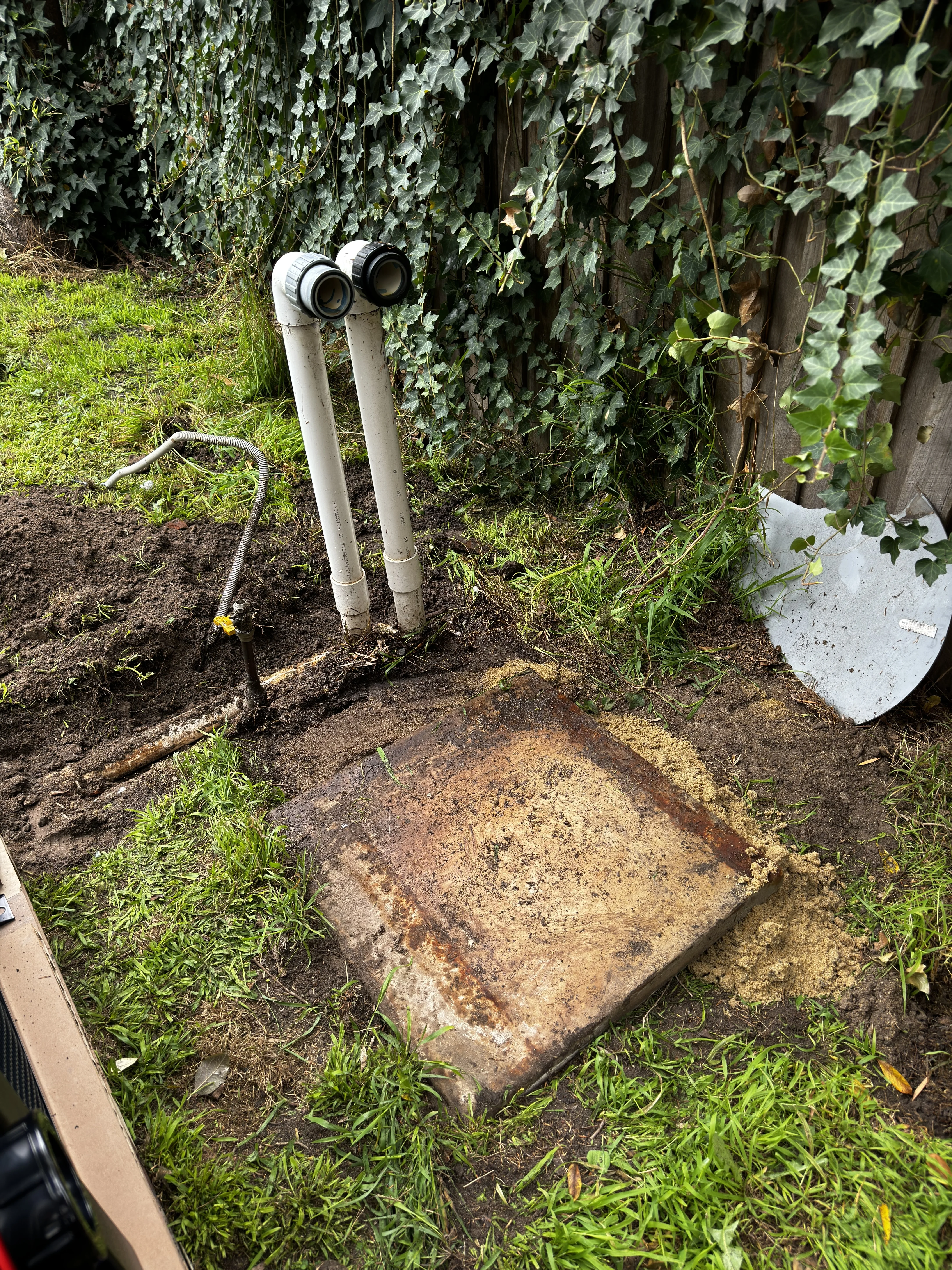
What we measure and specify
What you get
Which circuit is failing, backed by a test result.
As close as the site allows before any excavation.
The least invasive fix, with options where there's a choice.
Questions
A bucket test compares the pool's water loss with a bucket of pool water sitting beside it. If the pool drops noticeably more, something other than the weather is involved.
Usually a suction-side air leak: a lid O-ring, a union, a valve stem or a join upstream of the pump. Low water level at the skimmer can do it too.
Not to test. Each line is tested from the pad and the pool. Digging only happens once a fault has been proven and located.
It's the plumbing half of it. Shell, fitting and light-niche leaks are covered by our leak detection service.
Related specialist plumbing
Try the pump optimiser or the filter sizing calculator for a first look, or book a pool inspection.
Enquiries and quotes
Send a few wide photos of the plant and a short description of what the pool needs to do. We'll come back with the right first step.
Monday-Friday 9:30am-4:30pm, Saturday 9:30am-3:30pm. Sunday closed.