
01
Total head is two numbers
A pump has to overcome static head, the height difference it lifts water through, plus friction loss in every pipe, fitting, valve, filter, heater and cell. Together they set the total head the pump sees at a given flow.
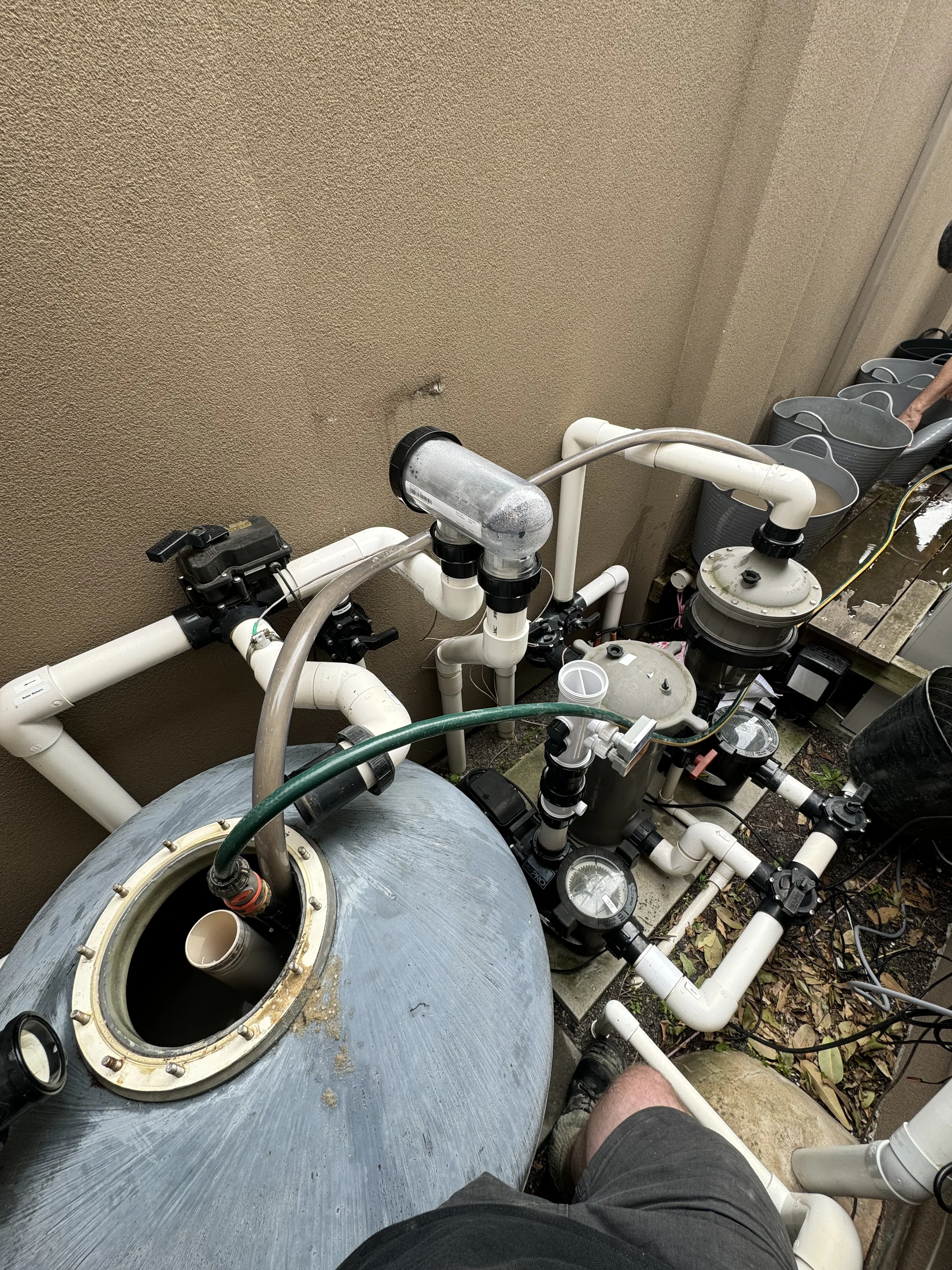
The numbers behind the plumbing
Every pool plumbing problem is a hydraulics problem underneath. Weak returns, a noisy pump, a heater that trips or a spa that won't jet properly usually come back to flow, head and how the circuits share the pump. We work those numbers out before anything is built.
Static head
The vertical lift between water level and the furthest outlet, measured, not guessed.
Friction loss
Every metre of pipe and every fitting adds resistance. We add it up.
Duty point
Where the pump curve meets your system curve, the flow you'll actually get.
Flow, head and balance worked out before a single fitting is cut.
01
A pump has to overcome static head, the height difference it lifts water through, plus friction loss in every pipe, fitting, valve, filter, heater and cell. Together they set the total head the pump sees at a given flow.
02
Friction loss rises roughly with the square of the water's velocity. Push twice the flow through the same pipe and the loss goes up about four times. That's why undersized pipe punishes big pumps.
03
Each pump has a curve of flow against head. Your plumbing has a curve too. Where they cross is the duty point: the flow you actually get. Changing the pump moves you along your system curve. Changing the pipework changes the curve itself.
04
Where several returns or features share a pump, water takes the easiest path. Balancing valves, sensible pipe sizing and commissioning with gauges make sure the far return, the spa jets and the waterfall each get their share.
Industry practice keeps suction velocity low, commonly around 1.8 metres per second or less, and return velocity a little higher. Staying under those limits keeps friction, noise and cavitation risk down. On the suction side, it also matters for safety: suction outlets and their layout are designed with entrapment risk in mind, and the Australian Standard for pool water recirculation systems (AS 1926.3) covers that area.
When a pool sits well above or below the plant, static head drives every decision. A pump above the water has to lift on suction, which leaves less margin before it cavitates. A pump far below needs check valves and isolation that hold back the full column of water. Waterfalls, raised spas, infinity edges and roof-mounted solar all add their own lift.
Calculations are checked against measurements: a vacuum gauge on the pump inlet, pressure across the filter and heater, and flow where it can be measured. If the numbers don't agree with the drawing, we find out why before building on them.
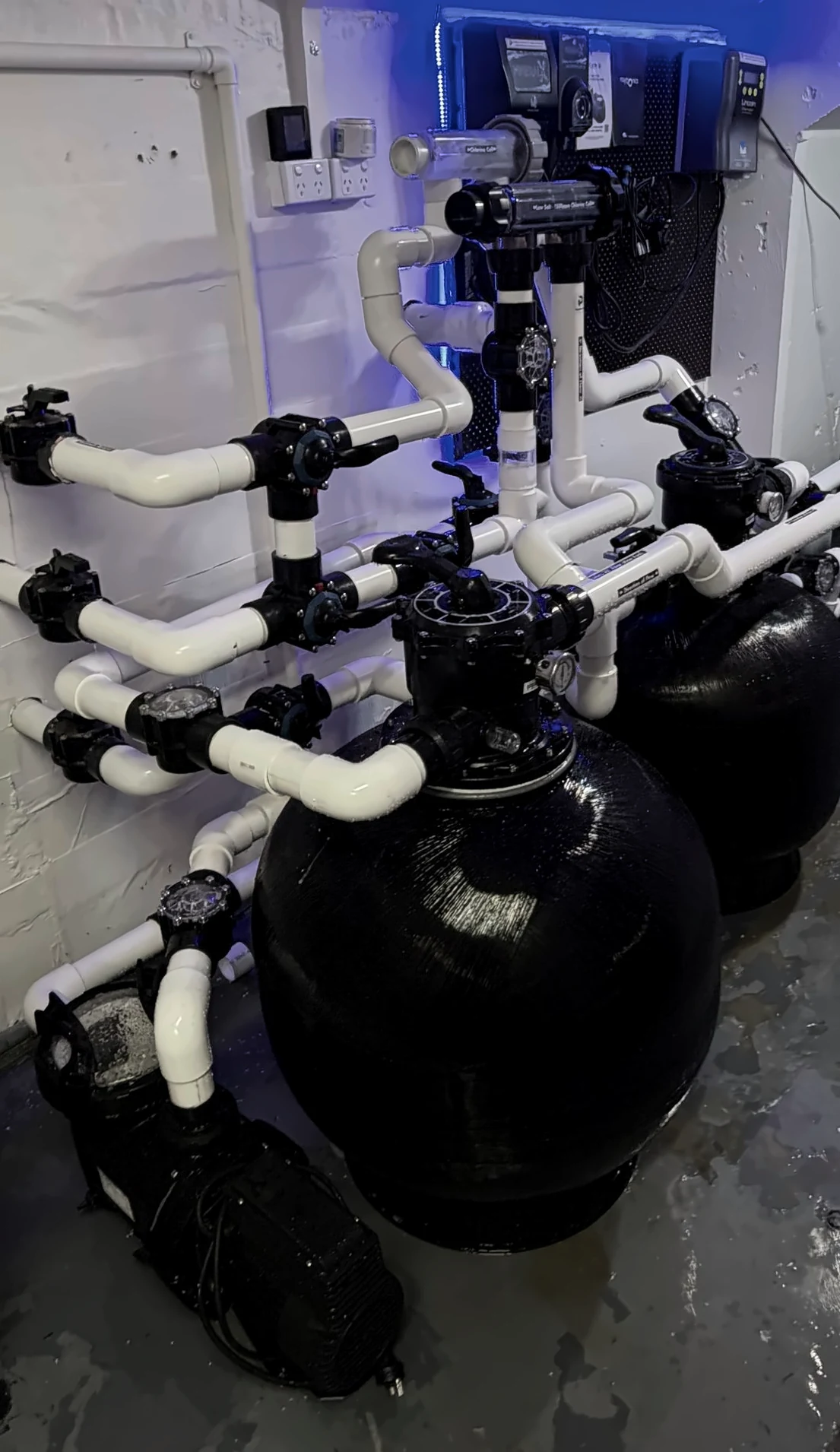
What we measure and specify
What you get
Pump selection based on your system curve, not a catalogue guess.
Returns, spa jets and features balanced at commissioning.
Plumbing sized to carry future equipment without choking it.
Questions
If the pipework is the restriction, a bigger pump mostly adds friction, noise and power use. On the suction side, it can starve itself and cavitate. Fixing the restriction usually beats upsizing the pump.
The vertical height the pump has to move water through. Pools well above or below the plant room, raised spas, waterfalls and roof solar all add static head.
Usually, yes. It's often a balance problem: water taking an easier path back to the pool, a valve set wrong, or pipework too small for the jets. We measure it and show you.
Our pump optimiser and filter sizing calculators are good for a first look. Site design uses measured lengths, heads and component losses for the specific pool.
Related specialist plumbing
Try the pump optimiser or the filter sizing calculator for a first look, or book a pool inspection.
Enquiries and quotes
Send a few wide photos of the plant and a short description of what the pool needs to do. We'll come back with the right first step.
Monday-Friday 9:30am-4:30pm, Saturday 9:30am-3:30pm. Sunday closed.