From pad to plant room
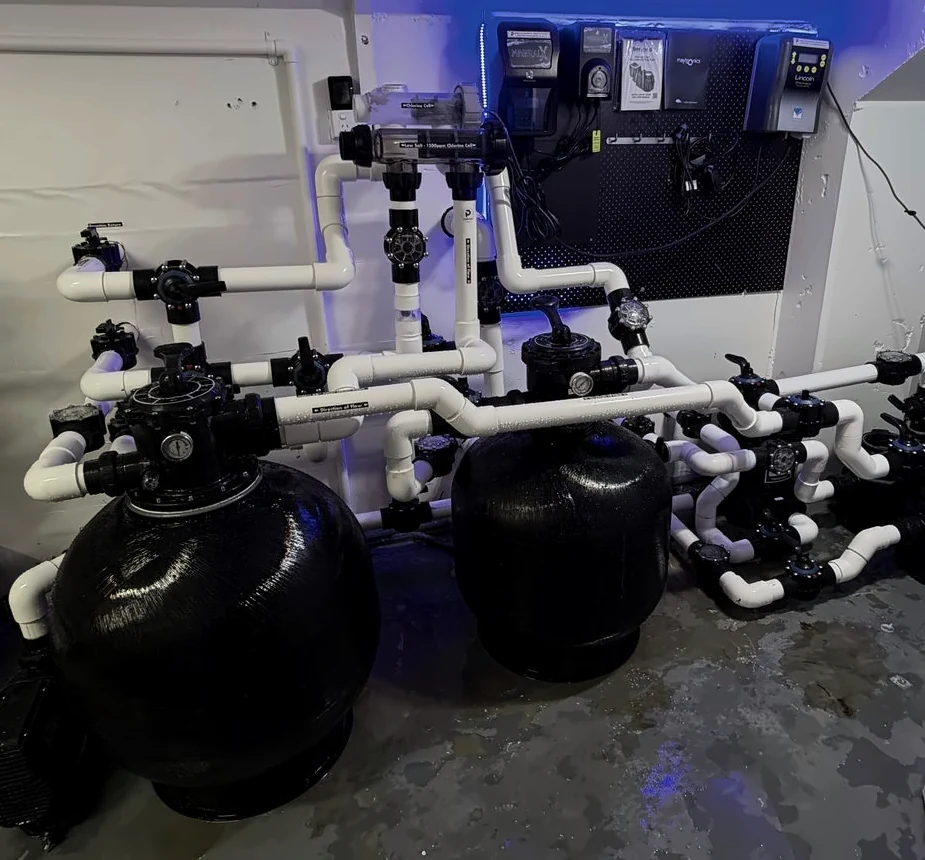
Most pool equipment in Melbourne sits on a pad beside a fence, plumbed one piece at a time as things were replaced. That works until the pool has more than one job to do. Add a spa, a waterfall, heating and a second sanitiser, and a pad full of tees and short-cuts turns into a system nobody can read.
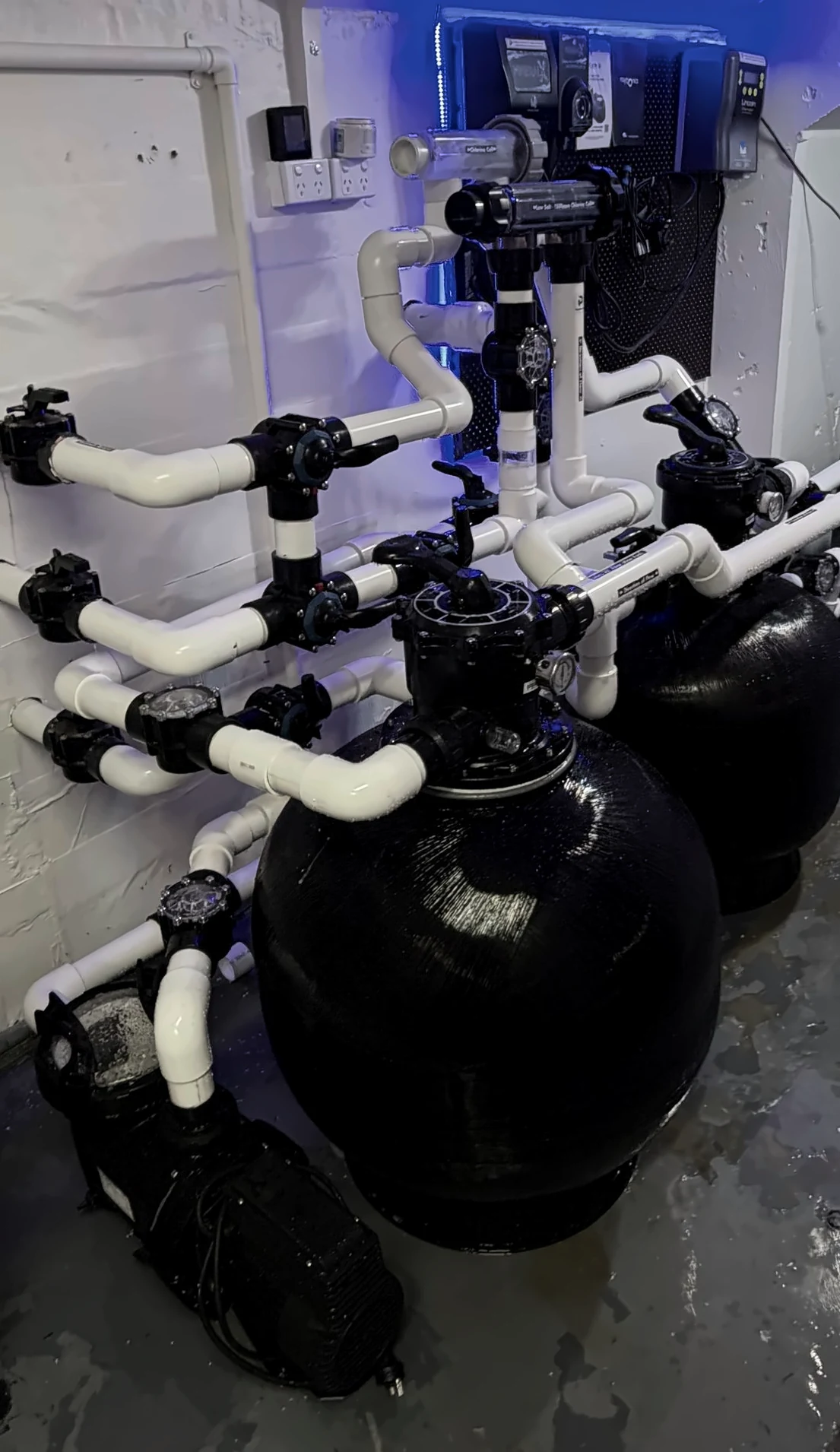
A designed manifold replaces those short-cuts with headers: one collecting every suction line, one distributing every return. Between them sit the pumps, filters, heaters and sanitisers, each on its own isolation valves. The result is easier to service, easier to diagnose and much easier to change later.
Designed around the people who service it
We lay plant rooms out for the person standing in front of them: valves at a reachable height, gauges where they can be read, enough clearance to lift a filter lid or pull a cartridge, and a drain point that doesn't flood the floor. Every valve gets a tag, and you get a drawing of the flow paths.
Process
On complex builds, the space is captured with LiDAR at 40 million points per square metre to 0.5 mm accuracy, reconstructed in COLMAP and TwinVision, and every pipe run and hydraulic calculation is modelled in OpenFOAM on Palatial's own frontier hardware, before a single fitting is cut.