
01
Every extra metre costs head
Moving the plant further from the pool adds pipe length, fittings and often height. Unless the pipe size goes up to suit, flow drops and the pump works harder. We re-run the hydraulics for the new position.
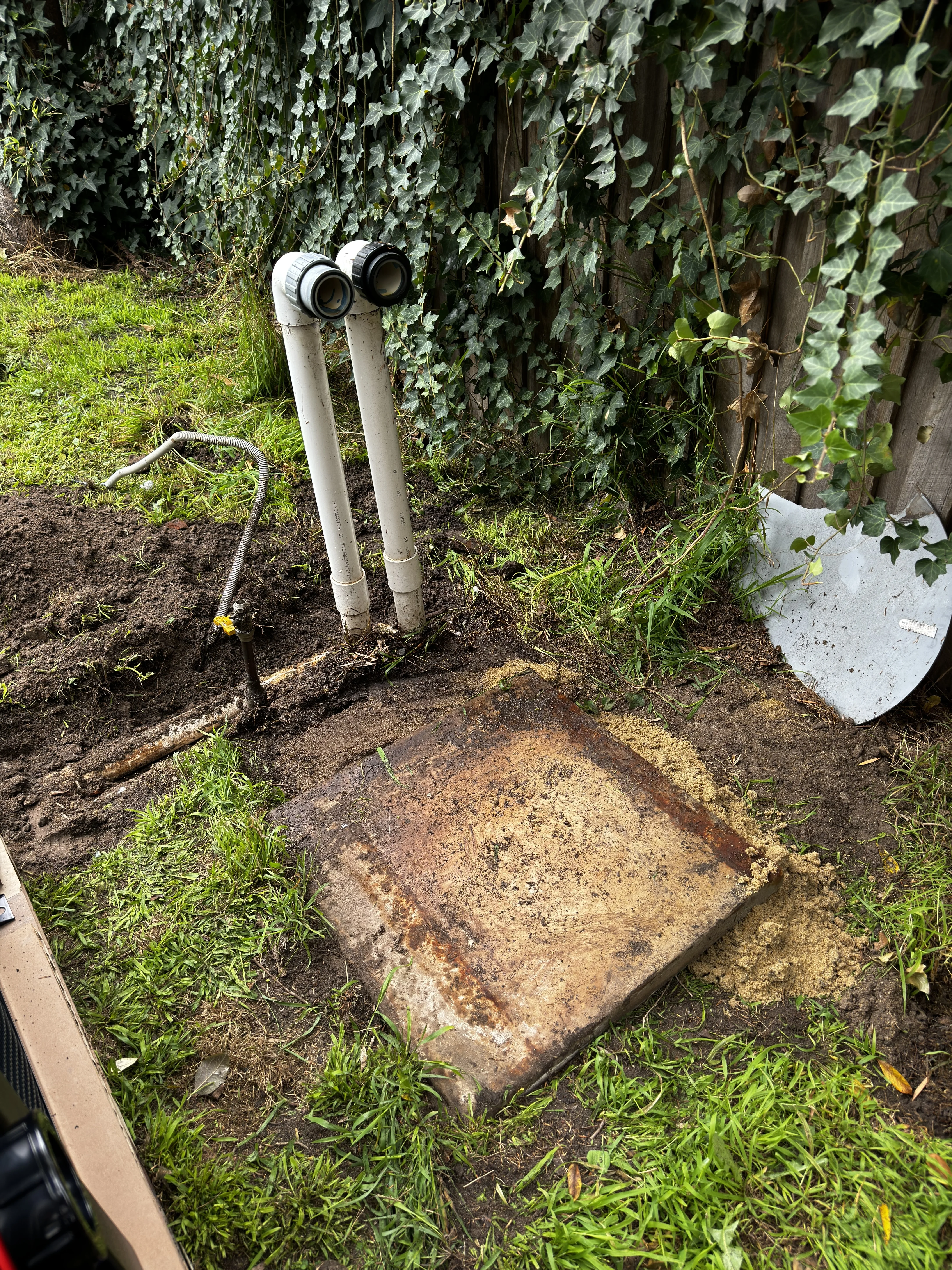
Move it once, plumb it properly
Renovations, noise complaints, a new garage or a cramped side passage are all good reasons to move pool equipment. Done well, it's a chance to fix decades of patchwork. Done badly, it adds distance and friction that the old pump was never sized for.
Distance planned for
Longer runs mean more friction. We size pipe and pumps for the new layout.
Old lines proven first
Buried pipework pressure tested before anyone decides to keep it.
Trades coordinated
Gas and electrical work sequenced with licensed trades where required.
New runs sized for the new distance, with buried pipework tested before it's reused.
01
Moving the plant further from the pool adds pipe length, fittings and often height. Unless the pipe size goes up to suit, flow drops and the pump works harder. We re-run the hydraulics for the new position.
02
Long suction runs are where air leaks, prime loss and cavitation show up first. We keep suction runs as short and straight as the site allows and size them generously.
03
Reusing buried pipework saves digging, but only if it holds. Each line is isolated and pressure or vacuum tested before it's connected to new equipment.
04
Ventilation for heaters and heat pumps, drainage for wash-down and filter backwash, flue clearances and service room all decide where the equipment can sensibly go.
Common triggers are a renovation or extension taking over the old pad, equipment too close to a neighbour's bedroom, flooding or poor drainage at the old spot, or simply no room to service anything. EPA Victoria's prohibited hours for pool pumps and heat pumps, which apply when they can be heard inside a neighbour's habitable room overnight, are often what starts the conversation.
On renovation projects we plan the new runs early, so sleeves and penetrations go in before slabs and paving. Where gas or electrical work is involved, that's done by appropriately licensed trades and sequenced with the plumbing so the pool is out of action for as short a time as possible.
On complex builds, the space is captured with LiDAR at 40 million points per square metre to 0.5 mm accuracy, reconstructed in COLMAP and TwinVision, and every pipe run and hydraulic calculation is modelled in OpenFOAM on Palatial's own frontier hardware, before a single fitting is cut.
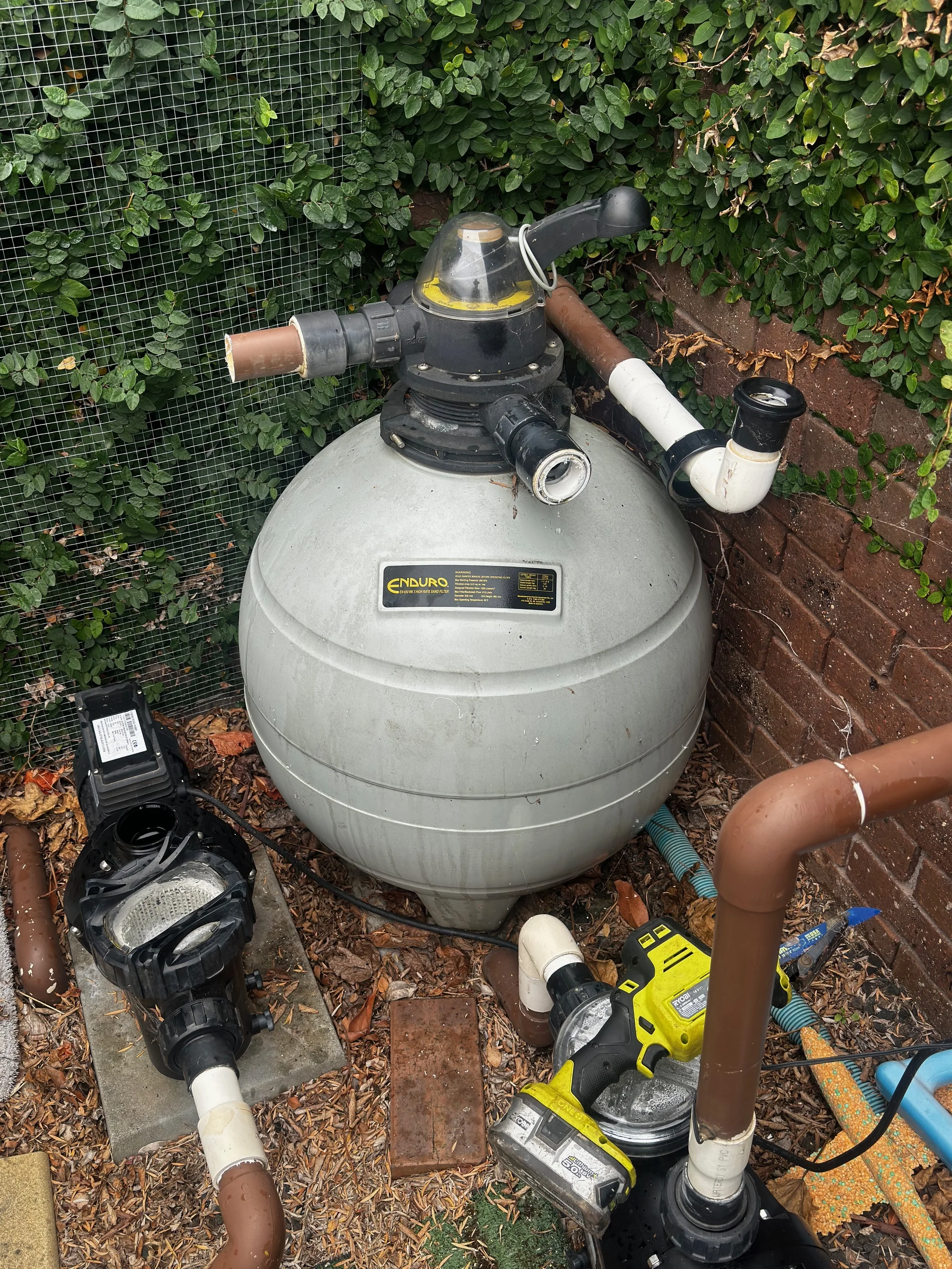
What we measure and specify
What you get
Quieter, drier and easier to service than where it was.
Pipe and pump sized for the new layout, not inherited from the old one.
Joints pressure tested and every mode run before handover.
Questions
It can if the extra distance isn't planned for. We size the new pipework for the new layout, so flow at the returns holds up.
If they pass a pressure or vacuum test, often yes. If they don't, we'd rather know before the new equipment goes in.
Licensed trades do any gas or electrical work required, coordinated with our plumbing.
It depends on the scope. We plan the sequence so the changeover itself is as short as possible, and tell you up front.
Related specialist plumbing
Try the pump optimiser or the filter sizing calculator for a first look, or book a pool inspection.
Enquiries and quotes
Send a few wide photos of the plant and a short description of what the pool needs to do. We'll come back with the right first step.
Monday-Friday 9:30am-4:30pm, Saturday 9:30am-3:30pm. Sunday closed.