
01
Valves that can be driven
Automated diverters need valves designed to take an actuator, mounted with room around them and positioned so the actuator can be removed without cutting pipe.
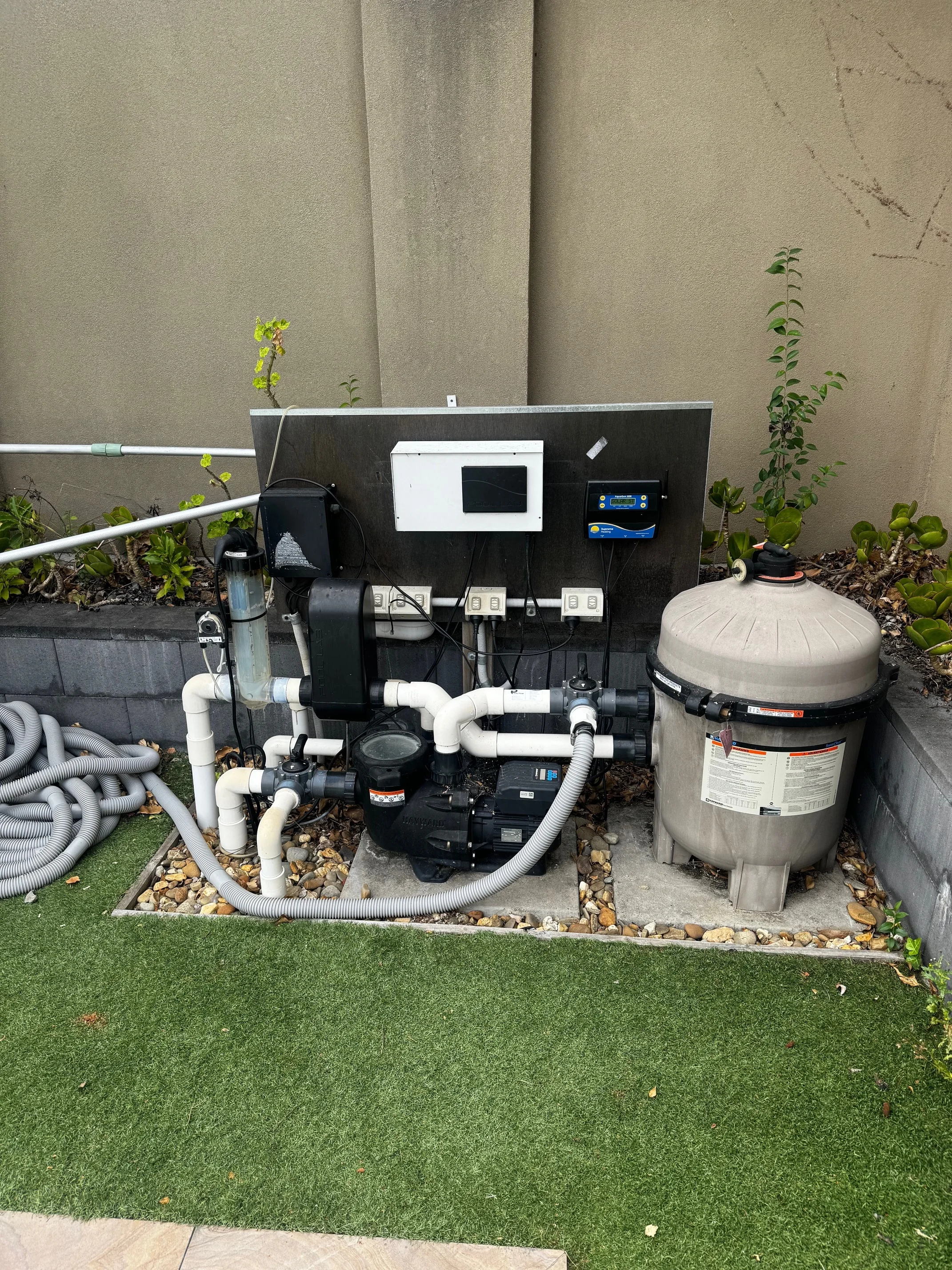
Plumbing that control systems can drive
Automation can only move water where the plumbing lets it. Actuator-ready valves, sensor points in the right places and a manifold laid out for control turn an app into a system that actually does what it says.
Actuator-ready
Valves chosen and positioned so actuators fit and can be serviced.
Sensors where they read true
Temperature, flow and water-quality points placed for honest readings.
Modes mapped
Every valve position written down for every mode.
Actuator-ready valves, sensor points and clean cable routes.
01
Automated diverters need valves designed to take an actuator, mounted with room around them and positioned so the actuator can be removed without cutting pipe.
02
A temperature sensor in a dead leg reads the pipe, not the pool. Flow switches need straight pipe ahead of them. Water-quality probes need steady flow past them. We place sensor points where the reading means something.
03
Pool, spa, spillover, features, heating, cleaning: each mode is a set of valve positions and pump speeds. We map them on paper first, so the controller is programmed to match the plumbing, not the other way around.
04
If power or communication drops, valves and pumps should land in a safe state. That's a plumbing decision as much as a programming one.
Many pools add a controller years after the plumbing went in. Often that means swapping some manual valves for actuator-ready ones, adding sensor points and tidying the manifold so the actuators have room. We survey what's there and tell you what has to change before the controller arrives.
On a new plant room or a re-plumb, the cheapest time to prepare for automation is now. Actuator-ready valves, capped sensor points and conduit for cabling cost little at build and save a re-plumb later, even if the controller comes years down the track.
Controller power, actuator wiring and anything connected to mains is handled by licensed electricians where required. We coordinate the plumbing and the electrical so they meet in the right place.
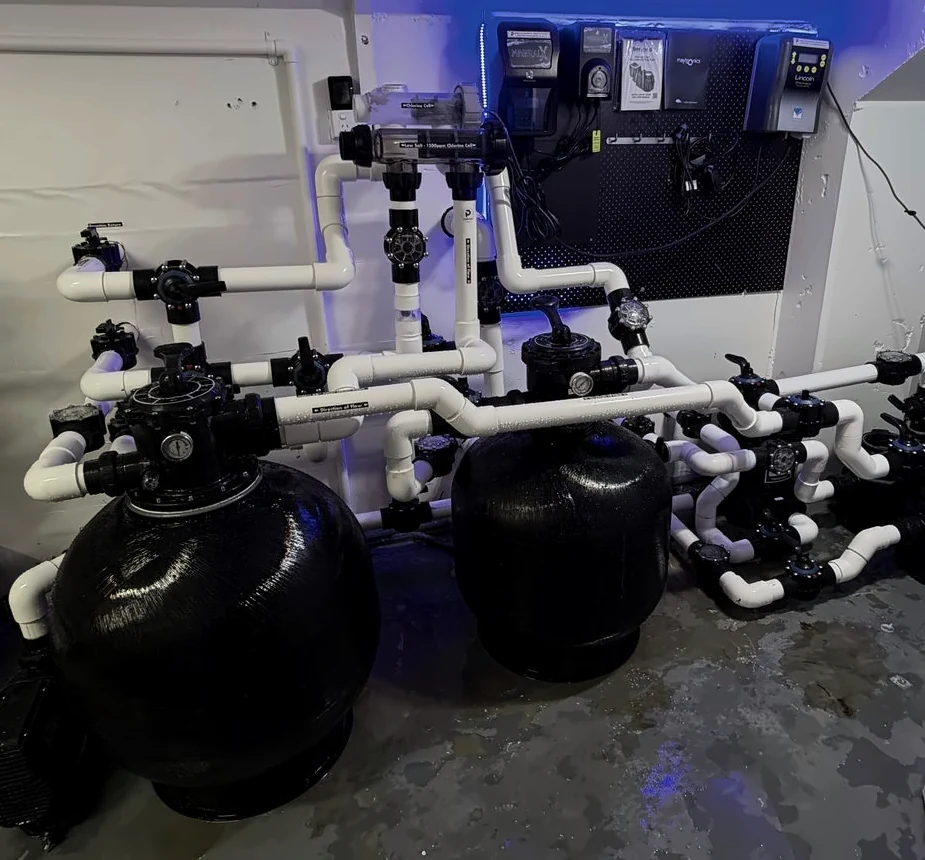
What we measure and specify
What you get
Controller modes mapped to the actual valve layout.
Sensors placed where they measure the pool, not a dead leg.
Capped points and actuator-ready valves for future control.
Questions
Usually, yes. Some manual valves may need replacing with actuator-ready ones, and sensor points may need adding. We survey first and tell you what needs to change.
Choose the plumbing layout and modes first. Then pick a controller that supports them. We'll explain what each layout needs.
Commonly an actuator not completing its turn, a valve fitted the wrong way round, or a controller mode that doesn't match the plumbing. We test the hardware directly, not just the app.
Licensed electricians handle mains and controller wiring where required, coordinated with our plumbing work.
Related specialist plumbing
Try the pump optimiser or the filter sizing calculator for a first look, or book a pool inspection.
Enquiries and quotes
Send a few wide photos of the plant and a short description of what the pool needs to do. We'll come back with the right first step.
Monday-Friday 9:30am-4:30pm, Saturday 9:30am-3:30pm. Sunday closed.